 L.A. DRVNGBook Now
Duda hired me for the simulation — where I play the role of the examiner, using the same form, the same criteria, the same maneuvers — and also asked me to accompany her on test day, even though she planned to use her own car.
When we arrived at the DMV, I noticed the front license plate sitting on her dashboard. I knew that was a potential issue — California law requires both plates to be displayed (Vehicle Code, Division 3, Sections 5200–5206), with a fine of $196 for violations. But the car was European and had no front bumper holes for a plate mount, so we moved on — the vehicle design isn't the driver's fault.
The car had just been purchased and still had the TIN sticker — temporary identification number — on the windshield corner. Inside at check-in, the DMV attendant told us the TIN was over three months old and therefore expired. Without valid registration, Duda couldn't take the test.
She looked at me: "What now?"
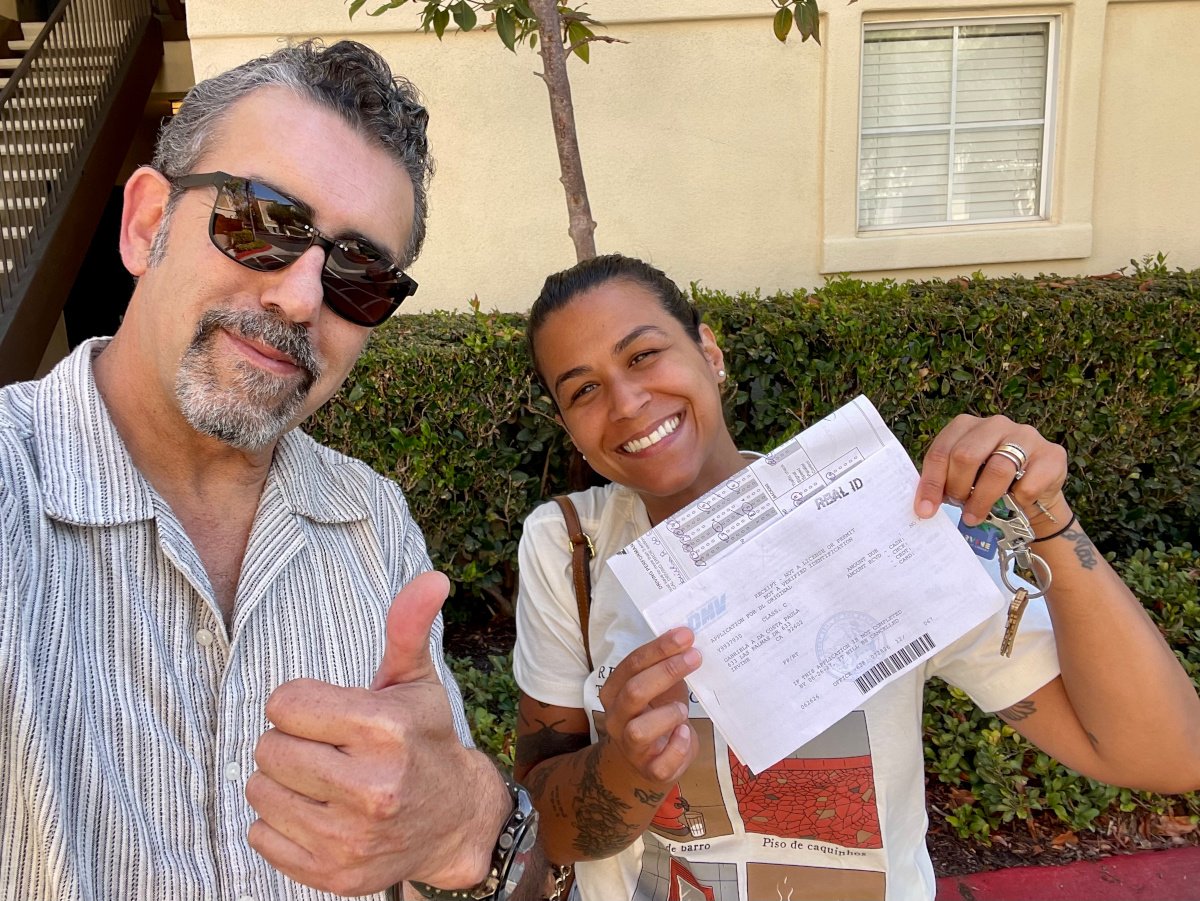
I asked the attendant to give us a few minutes. We went to my car, grabbed my registration and insurance, came back inside, and completed check-in without any further issues.
Using my car, Duda passed with 6 errors.
That's what professional accompaniment actually means — not just knowing the driving techniques, but knowing the bureaucracy, the paperwork requirements, and how to stay calm when something unexpected comes up at the window.